- Phone: +91 94298 24851
- Email: abhyasikamandal@gmail.com



In the first article, we discussed about the seed of social leadership.
The urge to do something meaningful. The moment when you feel, "Maybe I can make a difference." We understood that social leadership does not begin with a title or position. It begins with intention and cause. With the courage to look beyond yourself.
But a seed alone is not enough. A seed can have potential, but without roots, it cannot survive. It may sprout for a while, but the first storm will uproot it. That is why now, we move from the seed to something deeper.
We move to the roots. Because real leadership is not built on applause. It is built on what holds you steady when no one is clapping.
Before we explore different values, it is important to first understand what truly holds leadership together at its core.
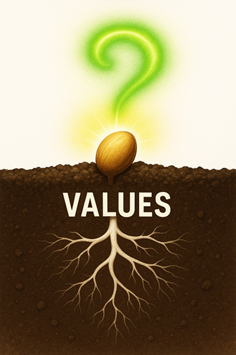
A seed can sprout, but without roots it will not last. Storms may come, the sun may burn, and the soil may shift. Only roots keep a tree steady. In leadership, your values are your roots. They hold you firm in difficulties, guide you in confusion, and give you strength to grow higher without collapsing. Values like honesty, integrity, and compassion may sound like simple words, but in reality, they are anchors. They decide how you behave when no one is watching. They show whether you are a leader only for show, or a leader who can be trusted for life.
Mahatma Gandhi once said, "A man is nothing but the product of his thoughts. What he thinks, he becomes." Thoughts turn into actions, but values make sure those actions are pure.
If roots are made of values, then the first and most fundamental value to understand is honesty.
In today's world, people often think honesty means loss. In business, in politics, even in hospitals, many assume that being truthful is not practical. But let me tell you this: honesty is not a weakness; it is a strength that builds trust.
At VIROC, we follow a principle of No Unindicated Surgeries. Meaning a surgery is to be done only when needed and patient agrees for it.
This practice has built more trust than any marketing campaigns. People think Honesty = Loss but in reality, Honesty = Profit. And, it is my personal mission with VIROC to prove that Honesty and Profit can go hand in hand.
When honesty is practiced consistently, it naturally gives rise to something even more powerful; trust.
Trust is not seen, but it is felt. Like the roots under the soil, it is invisible but essential. Without trust, no relationship, no team, no hospital, no leader can stand.
In leadership, trust is built when people believe three things about you:
At VIROC, patients often come saying, "We came because someone we know said you can be trusted." That is the highest compliment any leader or institution can receive. Not awards, not advertisements, but trust.
Once trust is built, the next responsibility is to protect it through your actions: and that is where integrity comes in.
Integrity is when your actions match your words. It is not just about avoiding lies, but about consistency between your promises and delivery.
Excellence is not just skill, it is also integrity — doing the right thing even when shortcuts tempt you.
At VIROC, a patient once chose robotic knee replacement surgery. But when I began operating, I realized her bones were osteoporotic. Robotics could not be used safely in that condition. I immediately shifted to the traditional method. The surgery went beautifully and her result was excellent.
Now, no one in the OT knew what happened. I could have stayed silent, but honesty and integrity demanded otherwise. After surgery, I sat with the family and explained the situation. I also returned the extra robotic charges. Importantly, I told only the family and not the patient, because I didn't want her confidence to drop just because we used the conventional approach instead of robotic technology. For her, the focus was recovery and that's what mattered.
That is integrity: doing the right thing even when no one is watching.
After honesty, trust, and integrity, leadership reaches its true depth when it connects with human emotions.
There is a subtle but powerful difference between sympathy, empathy, and compassion:
I remember a young lady of about 40 who came to us with severe pain. She could barely walk. At first, I felt sympathy for her suffering. Then I looked at her again and thought, "She is almost the age of my younger sister. What if my own sister had to face such pain?" In that moment, I truly felt her worry — that was empathy. Finally, I assured her, "Don't worry, I am here to take care of you at every step, before and after surgery." That assurance, backed by action, was compassion.
Sympathy may comfort, empathy may connect, but compassion transforms.
Once these values are understood, the next question is: how do they shape the energy of youth?

Vinayak Damodar Savarkar once explained that the reverse of the word Yuva (Youth) is Vayu (air). Air gives life to the world. When air is guided with discipline, it becomes pranayama — life-giving energy. But when it is uncontrolled, it becomes a storm. The same is true for youth.
When young energy is channelized with values, it builds nations, inventions, and movements. When it is directionless, it can bring chaos. That is why grounding yourself in honesty, integrity, and compassion is so important. They are like the guiding breath that turns raw energy into positive force. That is why the roots become a very crucial part of growth for the youth.
Once values are rooted within, they naturally begin to reflect in how you lead and express yourself.
There are many leadership styles; some lead by authority, some by example, some by inspiration. Social leadership asks us not to copy others but to discover our natural way.
All are valuable. What matters is alignment with your values. Without values, even the best style becomes manipulation. With values, even a quiet style becomes powerful. We will discuss more about leadership styles in the upcoming articles.
At the deepest level, all these values come from within: from a space we often call spirituality.
Many people think spirituality belongs to saints or gurus. But spirituality simply means living with honesty, purity, and awareness in daily work.
When we align profession with passion and values, work itself becomes meditation. For me, every surgery is a meditation and prayer. Every patient's smile is a blessing. That is spirituality at work — found in small, daily actions.
Before we conclude, it is important to pause and reflect on what these roots mean in your own life.
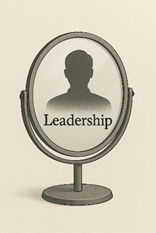
And now, we come back to the essence of everything we discussed: strong roots lead to meaningful outcomes.
I will end with a shloka from the Bhagavad Gita:
Do your work with honesty, integrity, and compassion. Don't worry about the results. When your roots are strong, fruits will come on their own.